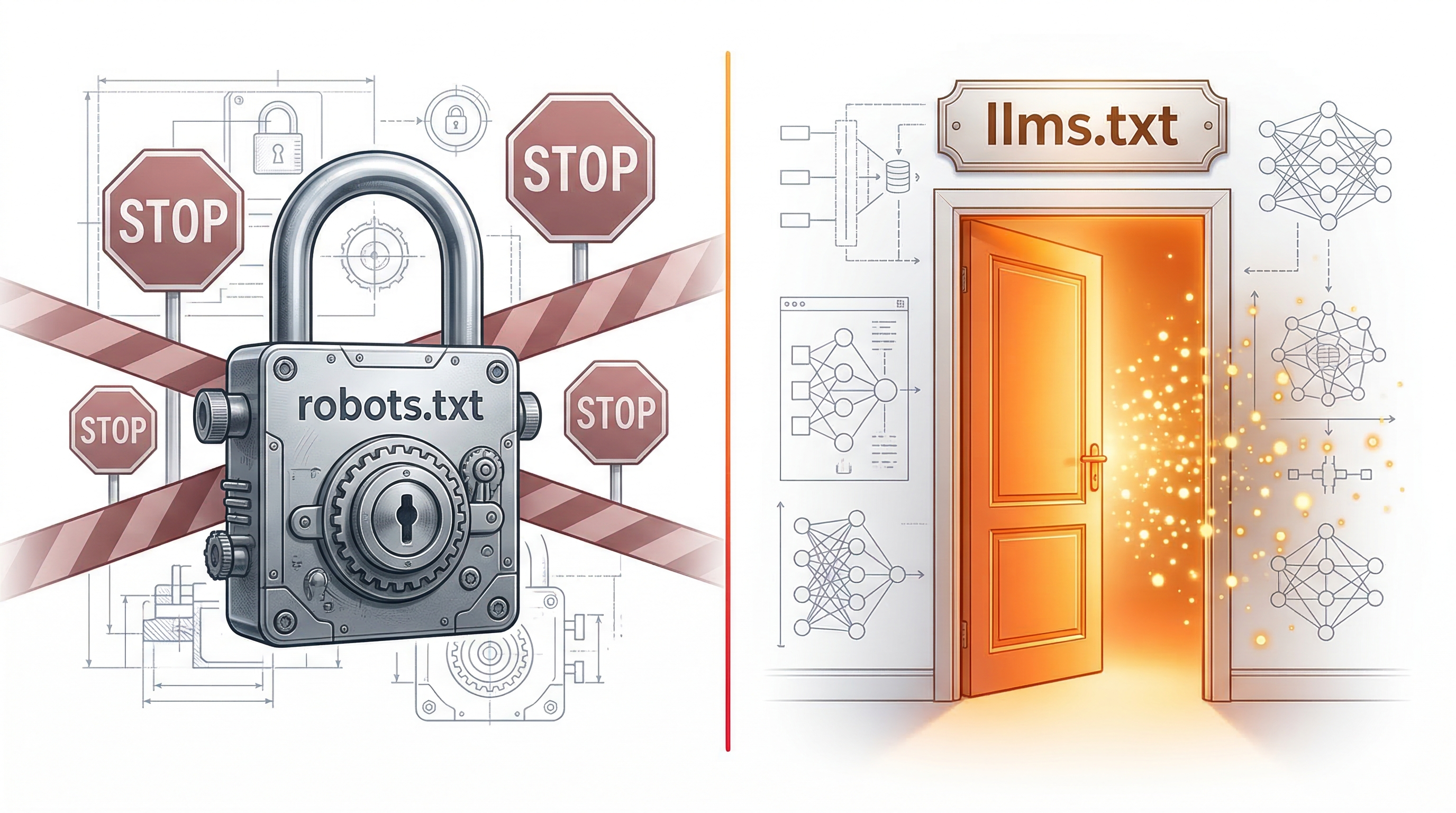
GEO: The Successor to SEO for the AI Era
Generative Engine Optimization is becoming the new standard. What does GEO mean for your online strategy and how do you get started?
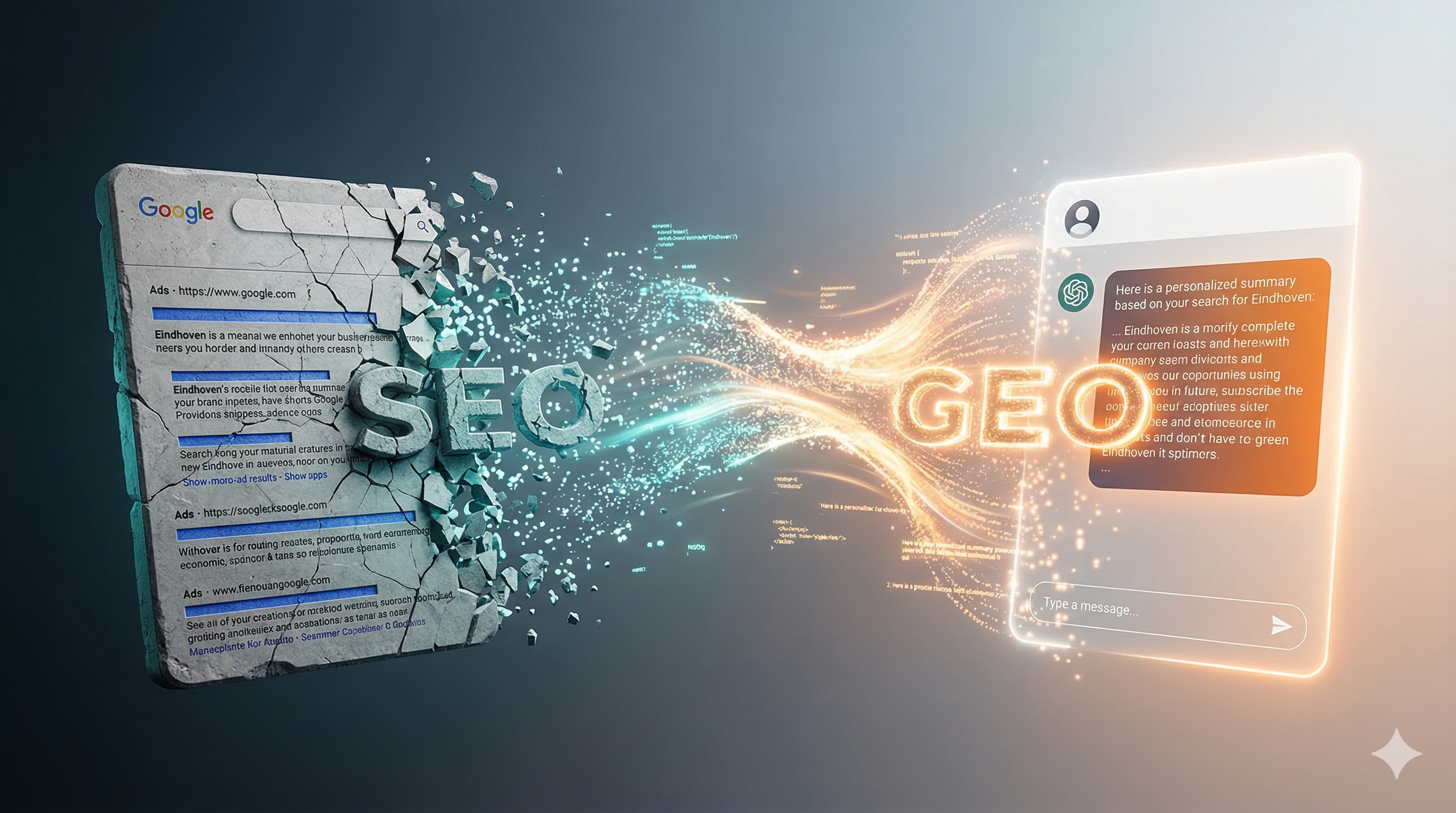
SEO (Search Engine Optimization) has been the standard for online visibility for decades. But with the rise of AI search engines, a new field is emerging: GEO, or Generative Engine Optimization. What exactly is GEO, how does it differ from traditional SEO, and what does it mean for your online strategy?
What is GEO?
GEO stands for Generative Engine Optimization, the art of optimizing your online presence for AI-powered search engines. While SEO focuses on ranking higher in Google search results, GEO focuses on being mentioned in the answers that AI tools give to users.
The difference is fundamental. With SEO, you optimize for a list of links. With GEO, you optimize for a direct answer. When someone asks ChatGPT 'What is a good restaurant in Rotterdam?', you want your restaurant to be in that answer, not on page 2 of a search results page.
Why is GEO important now?
The numbers speak for themselves. The use of AI tools for searching information is growing exponentially. More and more people rely on ChatGPT, Perplexity, and Google AI Overview for their daily searches. For some types of queries (product recommendations, service providers, how-to information), AI is already used more frequently than traditional search.
For businesses, this means a fundamental shift. If you only focus on Google SEO, you are missing a growing portion of your potential customers. GEO is not a replacement for SEO, it is a supplement. You need both to be fully visible in today's digital landscape.
How does GEO work in practice?
GEO revolves around three pillars: structured information, authority, and relevance. Structured information means your website is clear and machine-readable, with good meta descriptions, schema.org markup, and an llms.txt file. You build authority by publishing reliable, factual content that AI can use as a source.
You achieve relevance by being specific. AI prefers sources that answer a concrete question over sources with general marketing texts. A page that exactly describes which services you deliver, in which area, and for which target audience, scores better in AI answers than a vague 'about us' page.
GEO strategies you can apply now
Start with the low-hanging fruit: add an llms.txt file to your website. This is the fastest way to tell AI who you are and what you do. Next: ensure every page has a unique, informative meta description. Add schema.org markup (your CMS often has plugins for this). And regularly publish factual, valuable content.
Avoid common mistakes: no thin content (pages with little text), no duplicate content (the same text on multiple pages), and no content that consists only of marketing jargon. AI values sources that provide concrete, verifiable information.
The future of online visibility
GEO is still in its infancy, but the direction is clear. AI is becoming an increasingly important channel for finding businesses and services. Business owners who invest in GEO now are building a lead that will be hard to catch up to when the competition wakes up.
The first step is simple: check whether your website is ready for AI. Does your site have an llms.txt file? Are your meta descriptions in order? Is your content specific and factual? At llms-txt.nl, we help you with the first step: a professional llms.txt file, delivered within minutes for EUR 4.95.
llms-txt.nl editorial team
Articles about AI visibility and llms.txt for Dutch businesses.